
CELEBRITY
How Impeachment Would Work as Calls for Trump to Be Removed from Office Grow

How Impeachment Would Work as Calls for Trump to Be Removed from Office Grow
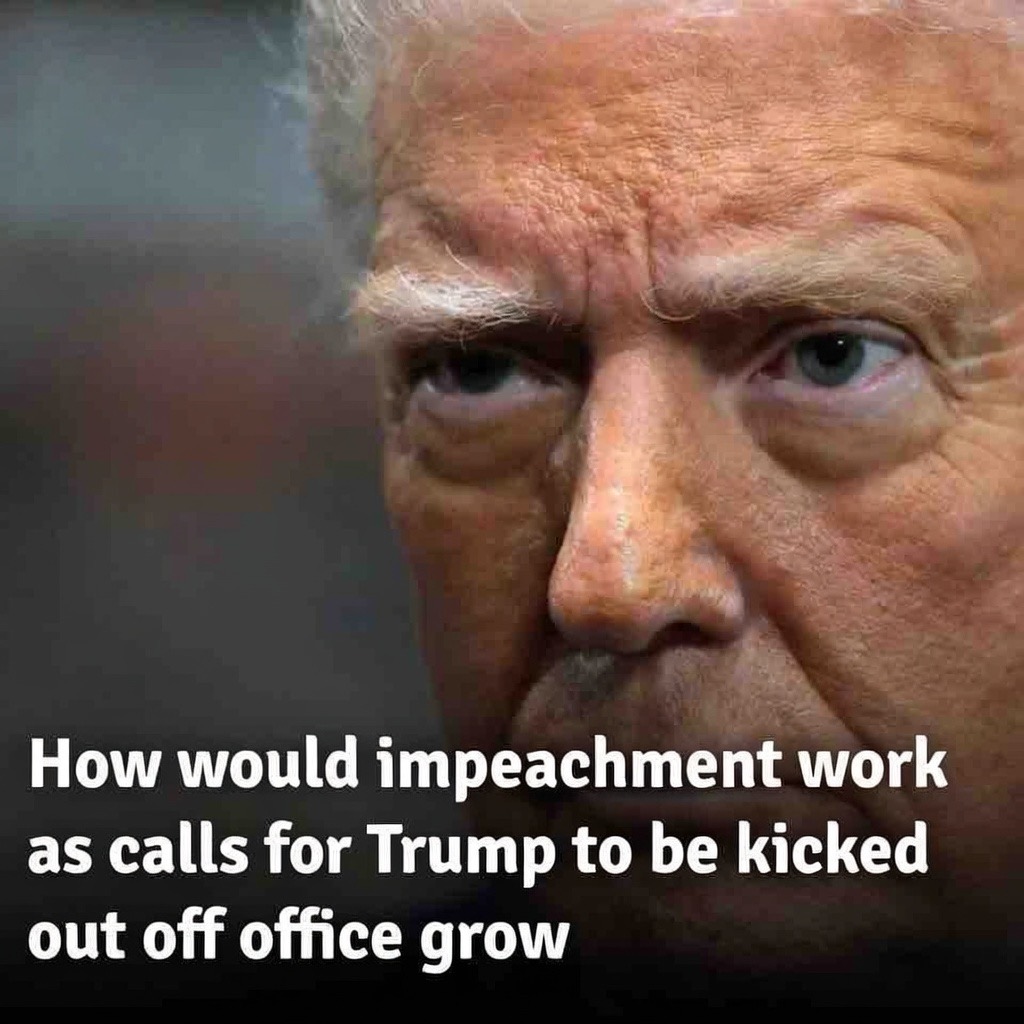
The image of a stern-faced President Donald Trump, eyes fixed ahead with a furrowed brow, has become a viral symbol fueling heated online discussions. Captured in a close-up that highlights his intense expression, the photo is overlaid with bold text asking: “How would impeachment work as calls for Trump to be kicked out of office grow.” This meme-like graphic reflects a surge in public and political chatter about potentially removing the president through constitutional means, especially amid recent controversies including military actions abroad and domestic policy moves. As of January 2026, these calls—driven by activists, some Democratic lawmakers, and advocacy groups—are intensifying, though no formal proceedings have advanced far.
Impeachment in the United States is a **two-stage constitutional process** designed as a check on executive power. The House of Representatives holds the sole authority to impeach, meaning it can formally charge a president (or other federal officials) with “Treason, Bribery, or other high Crimes and Misdemeanors” under Article II, Section 4 of the Constitution. This step requires only a simple majority vote in the House to approve articles of impeachment—essentially an indictment-like accusation. If passed, the process moves to the Senate, which conducts a trial to determine guilt or innocence.
During a Senate trial for a president, the Chief Justice of the United States presides to ensure impartiality. House members, known as “managers,” act as prosecutors presenting evidence, while the accused can mount a defense. Senators serve as jurors and must take an oath to judge impartially. Conviction and removal from office demand a two-thirds supermajority vote (at least 67 of 100 senators if all are present). The Senate may also vote separately, by simple majority, to bar the convicted official from future federal office. Notably, impeachment is a political process, not a criminal one—removal doesn’t preclude separate criminal prosecution.
In Trump’s current term, which began after his 2024 reelection, multiple impeachment resolutions have surfaced in the House. For instance, resolutions like H.Res.537 and others cite alleged abuses including unauthorized military actions (such as operations in Venezuela), violations of separation of powers, and other claims of high crimes. Democratic representatives like Al Green and Shri Thanedar have introduced articles focusing on everything from obstruction of justice to international aggression. Advocacy organizations, including Free Speech For People, have gathered significant petition support and documented dozens of purported grounds for impeachment, amplifying grassroots pressure.
Despite these efforts, momentum remains limited in practice. Republicans currently control the House, making a majority vote for articles highly unlikely without bipartisan support—which has proven rare in past cases. Trump himself has publicly warned House Republicans that failure to retain congressional majorities in the 2026 midterms could lead to impeachment attempts by Democrats, framing it as a partisan threat. Previous impeachments during his first term (2019 for abuse of power related to Ukraine, and 2021 for incitement of insurrection tied to January 6) both passed the House but ended in Senate acquittals, highlighting the high bar for actual removal.
The growing calls captured in the viral image stem from a mix of recent events—like military interventions abroad—and broader concerns over executive overreach. Activists argue these actions warrant urgent congressional action to protect democratic norms. However, without a shift in House control or overwhelming evidence swaying enough Republicans, impeachment remains more symbolic than imminent. The process underscores the Constitution’s deliberate design: slow, deliberative, and heavily weighted against easy removal of a sitting president.
Ultimately, while the photo and its caption tap into widespread frustration and speculation, the path to actually “kicking” a president out of office via impeachment is steep and politically charged. As the 2026 midterms loom, the debate will likely intensify, with both sides viewing congressional control as pivotal to either shielding or pursuing accountability. For now, the viral meme serves as a powerful reminder of impeachment’s role in American politics—potent in theory, but rare in execution.





Common’s Wild Confession Backfires: Serena Williams Delivers the Ultimate Clapback That Broke the Internet

Shockwaves Across the Middle East: IRGC Commander Assassinated in Daring U.S.-Israel Airstrike

Iran’s New Supreme Leader: A Clear and Present Danger

Blazing Skies Over Tehran: US-Israeli Airstrikes Obliterate Mehrabad Airport in Fiery Assault

China’s Bold Ultimatum: End the War Now or Face Global Chaos!

Fatwa Fury: Iranian Grand Ayatollah’s Deadly Decree Against Trump Ends in Fiery US Airstrike Retaliation

Iranian Navy Flees: Second Warship Begs for Refuge in Sri Lanka After U.S. Torpedo Sends Frigate to the Bottom

Trump’s Bold Ultimatum: America Demands Veto Power Over Iran’s Next Supreme Leader

Barack Obama Seals $10M Netflix Bombshell: The Untold Saga of America’s Trailblazing Leader Unveiled!

Alex Honnold’s “Embarrassing” Payday: Risking Life for Mid-Six Figures on Taipei 101

India’s Imposition of 30% Reciprocal Tariffs on Select US Imports: A New Chapter in Bilateral Trade Tensions
