
CELEBRITY
Trump’s Bold Military Ban: “Mission First. Military Ready. America Secure.” – The Policy That Put Combat Readiness Above All

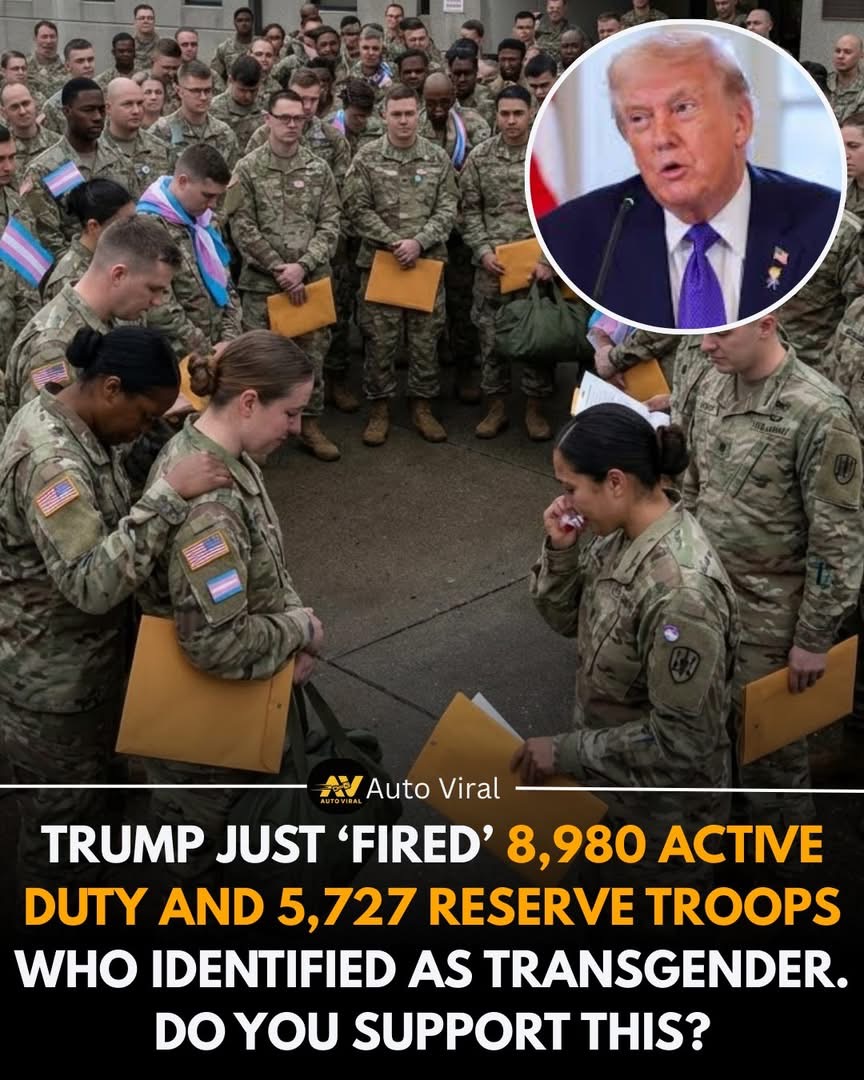
Trump’s Bold Military Ban: “Mission First. Military Ready. America Secure.” – The Policy That Put Combat Readiness Above All
In a decisive move that sent shockwaves through the nation, President Donald Trump’s administration reinstated a clear and controversial policy: transgender individuals would be barred from serving in combat roles in the U.S. military. The administration framed the decision not as a culture-war skirmish, but as a straightforward matter of national defense. With the rallying cry “Mission First. Military Ready. America Secure,” Trump officials argued that the sole purpose of the armed forces is to win wars—and anything that could undermine that mission had to be addressed head-on.
At the heart of the policy was a simple, unyielding principle: combat units demand the highest levels of physical performance, medical stability, and unit cohesion. Trump’s team pointed to the realities of gender transition—ongoing hormone treatments, potential surgeries, and associated medical requirements—as factors that could compromise a service member’s deployability and readiness. Supporters insisted this wasn’t about prejudice; it was about ensuring every soldier, sailor, airman, and Marine could perform at peak capacity when lives and national security were on the line. The military, they said, is not a laboratory for social change—it is a fighting force built for victory.
The policy also tapped into the bedrock values of military culture: discipline, uniformity, and focus on the mission. Advocates argued that introducing complex social and medical accommodations into high-stakes combat environments risked distracting commanders, straining resources, and eroding the cohesion that turns individuals into unbreakable teams. In the words of supporters, unresolved debates about identity have no place in foxholes where split-second decisions determine survival. The administration’s stance was clear: the battlefield is no place for experiments.
Critics quickly labeled the ban discriminatory, accusing the Trump administration of rolling back hard-won rights and targeting a vulnerable group. But supporters pushed back hard, emphasizing that military service is not an entitlement—it is a privilege earned through meeting rigorous, uncompromising standards. They noted that the armed forces already disqualify thousands of applicants every year for a wide range of medical, psychological, and physical conditions. From this perspective, the transgender policy was simply applying the same readiness-based criteria consistently, without exception or favoritism.
For millions of Trump supporters and military traditionalists, the message resonated deeply: America’s security must always come before political correctness. By restoring what they saw as common-sense priorities, the administration sent a powerful signal to both allies and adversaries—that the U.S. military would remain laser-focused on lethality, readiness, and winning wars. The policy became a symbol of “America First” in action: putting the nation’s defense above fleeting social trends.
Years later, the debate still rages, but the Trump-era stance remains a defining moment in the ongoing clash between military tradition and modern social values. Supporters view it as a courageous stand for discipline and effectiveness; detractors see it as a step backward. Yet one thing is undeniable: the policy forced a national conversation about what the military is truly for—and reminded everyone that, in the end, the mission must always come first.

Common’s Wild Confession Backfires: Serena Williams Delivers the Ultimate Clapback That Broke the Internet

Shockwaves Across the Middle East: IRGC Commander Assassinated in Daring U.S.-Israel Airstrike

Iran’s New Supreme Leader: A Clear and Present Danger

Blazing Skies Over Tehran: US-Israeli Airstrikes Obliterate Mehrabad Airport in Fiery Assault

China’s Bold Ultimatum: End the War Now or Face Global Chaos!

Fatwa Fury: Iranian Grand Ayatollah’s Deadly Decree Against Trump Ends in Fiery US Airstrike Retaliation

Iranian Navy Flees: Second Warship Begs for Refuge in Sri Lanka After U.S. Torpedo Sends Frigate to the Bottom

Trump’s Bold Ultimatum: America Demands Veto Power Over Iran’s Next Supreme Leader

Barack Obama Seals $10M Netflix Bombshell: The Untold Saga of America’s Trailblazing Leader Unveiled!

Alex Honnold’s “Embarrassing” Payday: Risking Life for Mid-Six Figures on Taipei 101

India’s Imposition of 30% Reciprocal Tariffs on Select US Imports: A New Chapter in Bilateral Trade Tensions
