
CELEBRITY
Trump’s Iron Fist: Massive Travel Ban Expansion Locks Out More Nations in National Security Crackdown!

Trump’s Iron Fist: Massive Travel Ban Expansion Locks Out More Nations in National Security Crackdown!
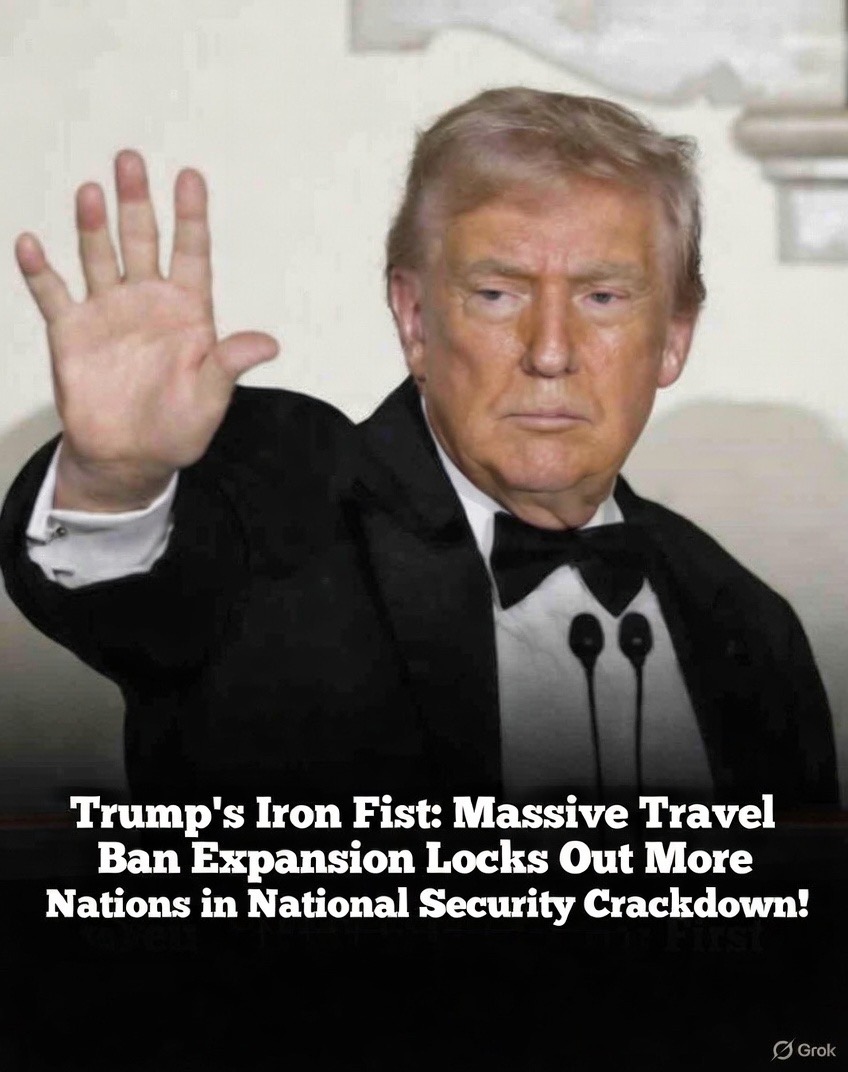
In a dramatic escalation of immigration policy, President Donald J. Trump has once again wielded his executive power to expand the controversial travel ban, adding five new countries to a full entry prohibition and slapping partial restrictions on 15 others. This move, announced on December 16, 2025, comes hot on the heels of a shocking incident involving an Afghan national accused of attacking National Guard troops near the White House, igniting fears of unchecked threats slipping through America’s borders. The iconic image of Trump raising his hand in a stern “stop” gesture perfectly captures the administration’s unyielding stance: no more risks, no more leniency. With this expansion, the ban now engulfs a staggering 32 countries, doubling down on what critics call a fortress mentality in U.S. policy.
The five newly added countries facing a complete travel blackout are Burkina Faso, Mali, Niger, South Sudan, and Syria—nations plagued by instability, terrorism, and governance failures that the White House deems too dangerous for unchecked access. In a particularly bold stroke, the administration has also imposed a full restriction on individuals holding travel documents from the Palestinian Authority, citing active terrorist groups in the region that have targeted American citizens. This isn’t just about visitors; the ban hammers both tourists and those seeking permanent residency, ensuring that only those with ironclad exemptions—like diplomats or athletes—can slip through the net. Meanwhile, the 15 countries hit with partial curbs include Angola, Antigua and Barbuda, Benin, Côte d’Ivoire, Dominica, Gabon, Gambia, Malawi, Mauritania, Nigeria, Senegal, Tanzania, Tonga, Zambia, and Zimbabwe, where visa categories like business, student, and tourist entries will now face heightened scrutiny.
This latest clampdown builds on the foundation laid in June 2025, when Trump revived his signature travel ban from his first term, initially targeting 12 countries with full bans: Afghanistan, Myanmar (formerly Burma), Chad, Republic of the Congo, Equatorial Guinea, Eritrea, Haiti, Iran, Libya, Somalia, Sudan, and Yemen. Seven others—Burundi, Cuba, Laos, Sierra Leone, Togo, Turkmenistan, and Venezuela—were slapped with partial restrictions back then, focusing on specific visa types such as B-1/B-2 for business and tourism, or F and M for students. The June policy was framed as a safeguard against foreign terrorists and national security threats, invoking presidential authority under immigration laws to prioritize American safety above all.
At the heart of these restrictions lie grim assessments of the targeted nations: widespread corruption, unreliable documents, high crime rates, and abysmal cooperation in sharing traveler data or repatriating deportees. The administration argues that these factors make proper vetting impossible, turning potential immigrants into ticking time bombs for U.S. security. For instance, high visa overstay rates and reluctance to accept returned citizens exacerbate enforcement headaches, while instability in places like Syria and the Palestinian territories heightens terrorism risks. Trump officials emphasize that this isn’t blanket discrimination but a calculated push to force foreign governments into better compliance, advancing counterterrorism and foreign policy goals in one fell swoop.
Yet, the backlash has been swift and furious. Immigration advocates, like Laurie Ball Cooper from the International Refugee Assistance Project, blast the expansion as a “shameful attempt to demonize people based on their origin,” arguing it has little to do with genuine security and everything to do with political theater. Critics warn that such broad-brush policies could strand families, disrupt businesses, and alienate allies, painting America as isolationist in a interconnected world. No immediate legal challenges are detailed, but history suggests court battles loom, echoing the fiery disputes over Trump’s original bans during his first presidency.
The implications ripple far beyond U.S. borders, potentially straining diplomatic ties with African and Middle Eastern nations already grappling with economic woes. Businesses reliant on international talent—from tech firms to universities—face new hurdles, while humanitarian concerns mount for refugees fleeing war-torn regions like South Sudan or Syria. Economists speculate on the hidden costs: lost tourism dollars, stalled investments, and a tarnished global image that could deter future alliances. As the world watches, this expansion underscores Trump’s “America First” mantra, but at what price to unity and compassion?
Looking ahead, the ban’s immediate effect—implemented shortly after the announcement—could reshape migration patterns overnight. With exemptions for existing visa holders and permanent residents, the policy aims to minimize chaos, but skeptics predict enforcement nightmares and human rights outcries. As Trump doubles down on border security amid rising tensions, one thing is clear: the raised hand in that viral image isn’t just a gesture—it’s a declaration of war on perceived vulnerabilities, setting the stage for a contentious chapter in American immigration history.






Barack Obama Seals $10M Netflix Bombshell: The Untold Saga of America’s Trailblazing Leader Unveiled!

Alex Honnold’s “Embarrassing” Payday: Risking Life for Mid-Six Figures on Taipei 101

India’s Imposition of 30% Reciprocal Tariffs on Select US Imports: A New Chapter in Bilateral Trade Tensions

The Viral Late-Night Takedown: How Jimmy Kimmel and Jim Carrey’s On-Air Exposure Sent Shockwaves Through Trump World

Russia Drops Bombshell Warning: “The End of the World” Could Begin if Trump Continues “Dangerous” Plan

Trump’s Bold Military Ban: “Mission First. Military Ready. America Secure.” – The Policy That Put Combat Readiness Above All

Trump Freaks Out as Jimmy Kimmel Delivers Epic On-Air Smackdown to JD Vance – MAGA in Meltdown Mode!

50 Cent’s Masterstroke: How the Troll King Turned 20 Years of Beef into Netflix’s Most Explosive Exposé!

How Impeachment Would Work as Calls for Trump to Be Removed from Office Grow

50 Cent’s Epic $124 Million Power Move: Transforming Louisiana into Hollywood’s New Hotspot!

🚨 Trump Furious: “Decision Coming Fast” on Iran as Protester Deaths Soar Past 2,000! 🔥
