
CELEBRITY
California Governor Newsom Accuses President Trump of Being the “Grinch in Chief” Amid Tariff Debates

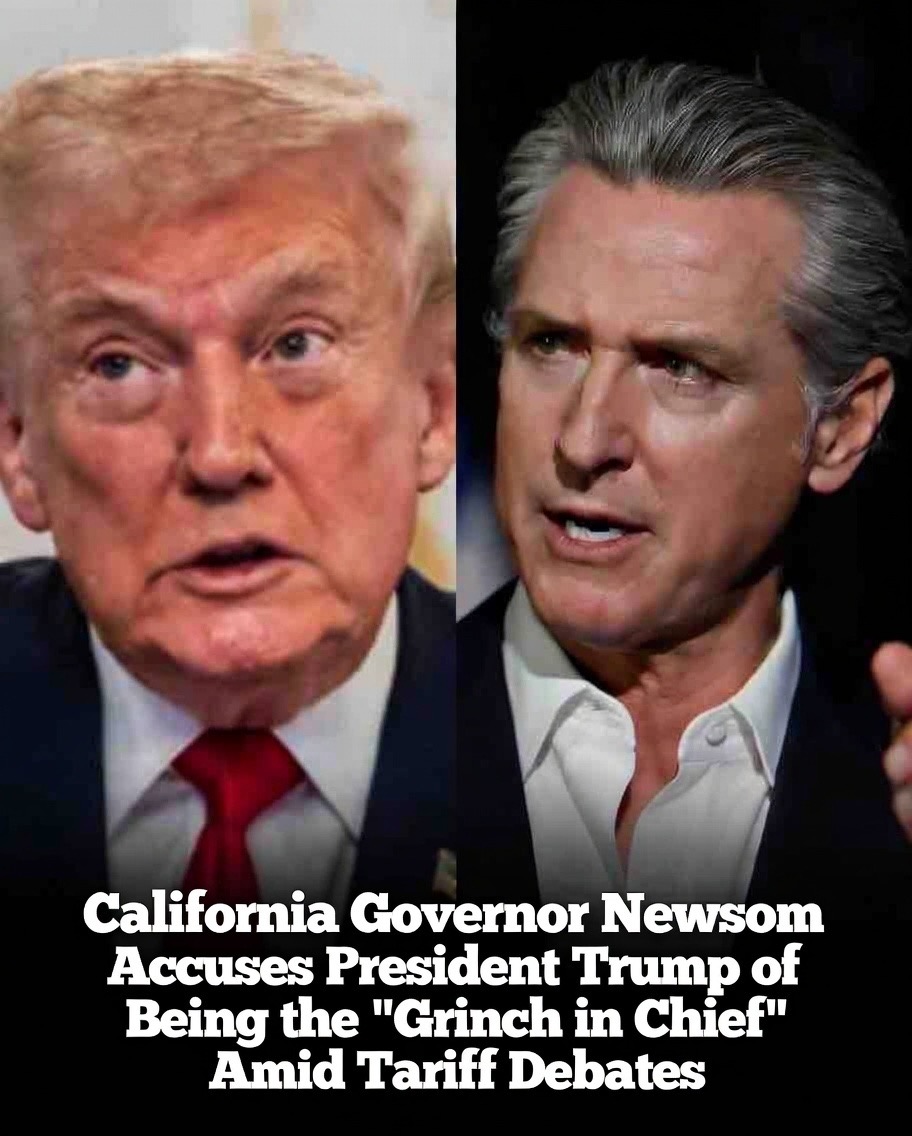
California Governor Newsom Accuses President Trump of Being the “Grinch in Chief” Amid Tariff Debates
In a striking visual that captures the ongoing political feud between California Governor Gavin Newsom and President Donald Trump, a split-image meme has circulated widely online, featuring the two leaders side by side. The caption boldly states: “Newsom Blames Trump Tariffs for Rising Holiday Costs, Calls Him ‘Grinch in Chief.'” This imagery, evoking the classic Dr. Seuss character who steals Christmas joy, underscores Newsom’s sharp criticism of Trump’s economic policies just as Americans prepare for the holiday season in 2025. As families grapple with shopping lists and budgets, Newsom’s remarks have ignited a fresh round of partisan sparring over trade tariffs and their real-world impacts.
Governor Newsom’s comments originated from a post on X, where he lambasted Trump’s tariffs as “the gift that keeps on taking.”He claimed that holiday gifts have surged by 26% this year, exacerbating struggles for families already strained by basic expenses. Newsom’s rhetoric positions Trump as a modern-day Grinch, implying that the president’s trade measures are dampening holiday cheer by inflating prices on imported goods like toys, electronics, and decorations. This narrative aligns with broader Democratic critiques, which argue that tariffs act as a hidden tax on consumers, particularly during peak shopping periods.
Trump’s tariff policies, reintroduced and expanded in his second term, aim to protect American industries by imposing duties on imports from countries like China. Proponents, including the president himself, assert that these measures generate substantial revenue—over $88 billion so far—and encourage domestic manufacturing without fueling inflation.In a recent post, Trump highlighted how tariffs bring in “Billions of Dollars a week” from “abusing countries,” dismissing retaliatory actions and crediting past leaders for allowing exploitation of the U.S. economy.Supporters argue that any short-term price hikes are offset by long-term economic gains, such as job creation and reduced trade deficits.
However, economic analyses paint a more nuanced picture. Reports indicate that tariffs have indeed contributed to uneven price increases for holiday items, with some categories like imported toys and apparel seeing hikes due to passed-on costs from importers.A PBS segment noted that Trump’s tariffs could make the season “less merry” for shoppers, citing analyses from Lending Tree that project additional burdens on consumer budgets.Yet, the exact 26% figure cited by Newsom has faced scrutiny, with fact-checks labeling it as misleading since no direct data attributes the full rise solely to tariffs—other factors like supply chain issues and global inflation play roles.
Critics from the Republican side have pushed back against Newsom’s claims, portraying them as politically motivated fearmongering. While Trump hasn’t directly addressed the “Grinch in Chief” moniker in recent statements, his administration has defended tariffs in broader terms, emphasizing their role in making America “wealthy again.”Some conservative commentators have mocked Newsom’s post, suggesting it’s a deflection from California’s own economic challenges, such as high living costs and state policies. This exchange highlights the deepening divide, with tariffs becoming a flashpoint in the lead-up to midterm elections.
Beyond the rhetoric, the debate has real implications for holiday spending. Surveys show that a majority of U.S. adults have noticed elevated prices for gifts and essentials, prompting some to scale back purchases or accrue more debt.Organizations like the American Progress have called tariffs a “hidden holiday tax,” estimating extra costs for popular items.As Christmas Eve arrives, families may feel the pinch, but economists warn that the full effects of expanded tariffs could unfold well into 2026, potentially reshaping trade relations and consumer habits.
Ultimately, this tariff tussle between Newsom and Trump exemplifies the polarized lens through which economic policies are viewed in 2025 America. While Democrats warn of immediate hardships for working families, Republicans tout strategic wins for national sovereignty. As the holiday lights flicker, the question remains whether these measures will deliver prosperity or prolong economic grinchery for the average shopper.


Barack Obama Seals $10M Netflix Bombshell: The Untold Saga of America’s Trailblazing Leader Unveiled!

Alex Honnold’s “Embarrassing” Payday: Risking Life for Mid-Six Figures on Taipei 101

India’s Imposition of 30% Reciprocal Tariffs on Select US Imports: A New Chapter in Bilateral Trade Tensions

The Viral Late-Night Takedown: How Jimmy Kimmel and Jim Carrey’s On-Air Exposure Sent Shockwaves Through Trump World

Russia Drops Bombshell Warning: “The End of the World” Could Begin if Trump Continues “Dangerous” Plan

Trump’s Bold Military Ban: “Mission First. Military Ready. America Secure.” – The Policy That Put Combat Readiness Above All

Trump Freaks Out as Jimmy Kimmel Delivers Epic On-Air Smackdown to JD Vance – MAGA in Meltdown Mode!

50 Cent’s Masterstroke: How the Troll King Turned 20 Years of Beef into Netflix’s Most Explosive Exposé!

How Impeachment Would Work as Calls for Trump to Be Removed from Office Grow

50 Cent’s Epic $124 Million Power Move: Transforming Louisiana into Hollywood’s New Hotspot!

🚨 Trump Furious: “Decision Coming Fast” on Iran as Protester Deaths Soar Past 2,000! 🔥
