
CELEBRITY
Blazing Skies Over Tehran: US-Israeli Airstrikes Obliterate Mehrabad Airport in Fiery Assault

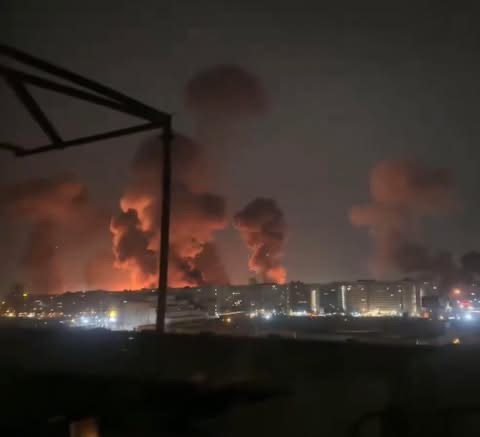
Blazing Skies Over Tehran: US-Israeli Airstrikes Obliterate Mehrabad Airport in Fiery Assault
In a stunning escalation of the ongoing conflict, Tehran’s Mehrabad International Airport was engulfed in flames following a barrage of US-Israeli airstrikes on March 7, 2026. Eyewitnesses described the night sky lighting up like a bonfire as explosions rocked the capital’s main commercial hub, sending thick plumes of black smoke billowing into the air. Videos circulating on social media captured the chaos, showing what appeared to be commercial planes burning on the tarmac, turning the once-bustling airport into a scene of utter devastation. This strike marks a pivotal moment in the nine-day war that has gripped the Middle East, with Iran facing relentless attacks on its military and infrastructure targets.
The Israeli Defense Forces (IDF) confirmed the operation, stating that their jets targeted 16 aircraft belonging to Iran’s elite Quds Force at Mehrabad Airport. These planes, according to the IDF, were instrumental in ferrying weapons and funds to Hezbollah militants in Lebanon, bolstering Iran’s proxy networks across the region. The airport, a dual-use facility handling both civilian flights and military operations, was described as a “central hub” for Iran’s overseas military endeavors. Footage from state media and independent sources showed massive fireballs erupting near the Azadi Tower, close to the airport, as the strikes hit with precision and overwhelming force. Residents nearby reported hearing deafening blasts that shook buildings for miles around, painting a picture of terror in the heart of Tehran.
This assault is part of a broader campaign launched by the US and Israel on February 28, 2026, in response to Iranian missile attacks on Israeli soil. Now on day nine of the conflict, the strikes have expanded to include oil storage depots, refining facilities, and other critical infrastructure, crippling Iran’s economy and military capabilities. Iranian state media reported that two hospitals in the vicinity were also damaged, exacerbating the humanitarian crisis as casualties mount. President of Iran issued a public apology for regional aggressions but doubled down on criticisms of American and Israeli actions, vowing resilience amid the bombardment.The war has spilled over into neighboring countries like Lebanon and Iraq, drawing in global powers and raising fears of a wider regional conflagration.
Eyewitness accounts from Tehran paint a harrowing picture of the aftermath. Local residents, speaking anonymously, described fleeing their homes as flames lit up the night and acrid smoke choked the air. “It looked like the end of the world,” one resident texted to international media, noting the sight of twisted metal and burning wreckage scattered across the runway.Social media platforms buzzed with videos of the inferno, including one from Al Jazeera showing massive explosions at the airport’s main hub for domestic flights. These personal stories underscore the human cost of the conflict, with civilians caught in the crossfire of geopolitical rivalries.
Internationally, reactions have been swift and divided. The United Nations called for an immediate ceasefire, warning of catastrophic consequences for global oil supplies and food prices, which could spike due to disrupted Iranian exports. Meanwhile, US officials, including former President Trump who had warned of “complete destruction,” defended the strikes as necessary to dismantle Iran’s support for terrorism. Allies like the UK and France expressed cautious support, while Russia and China condemned the attacks as violations of sovereignty, pledging aid to Tehran. This global rift highlights the precarious balance of power in the Middle East, with alliances straining under the weight of escalating violence.
The impact on air travel and civilian life in Iran has been profound. Mehrabad Airport, Tehran’s busiest for domestic routes, has partially resumed operations but with severe disruptions, stranding thousands and halting cargo shipments. Flights to and from the capital are rerouted through alternative airports, but with ongoing strikes, the aviation sector faces indefinite paralysis. Economists predict billions in losses, compounding Iran’s already strained economy amid sanctions and war damages. For ordinary Iranians, the strikes mean power outages, fuel shortages, and a pervasive sense of insecurity as daily life grinds to a halt.
As the dust settles—or rather, as the smoke clears—the future remains uncertain. Will these airstrikes force Iran to the negotiating table, or will they ignite further retaliation? Analysts speculate that Tehran could respond with asymmetric warfare, targeting US interests in the Gulf or escalating cyber attacks. With the world watching, this fiery assault on Mehrabad Airport could be the spark that either douses the flames of war or fans them into an uncontrollable blaze, reshaping the geopolitical landscape for years to come.




Common’s Wild Confession Backfires: Serena Williams Delivers the Ultimate Clapback That Broke the Internet

Shockwaves Across the Middle East: IRGC Commander Assassinated in Daring U.S.-Israel Airstrike

Iran’s New Supreme Leader: A Clear and Present Danger

Blazing Skies Over Tehran: US-Israeli Airstrikes Obliterate Mehrabad Airport in Fiery Assault

China’s Bold Ultimatum: End the War Now or Face Global Chaos!

Fatwa Fury: Iranian Grand Ayatollah’s Deadly Decree Against Trump Ends in Fiery US Airstrike Retaliation

Iranian Navy Flees: Second Warship Begs for Refuge in Sri Lanka After U.S. Torpedo Sends Frigate to the Bottom

Trump’s Bold Ultimatum: America Demands Veto Power Over Iran’s Next Supreme Leader

Barack Obama Seals $10M Netflix Bombshell: The Untold Saga of America’s Trailblazing Leader Unveiled!

Alex Honnold’s “Embarrassing” Payday: Risking Life for Mid-Six Figures on Taipei 101

India’s Imposition of 30% Reciprocal Tariffs on Select US Imports: A New Chapter in Bilateral Trade Tensions
