
CELEBRITY
Federal Judge Slams Brakes on Trump’s National Guard Rollout in LA as Courtroom Chaos Escalates

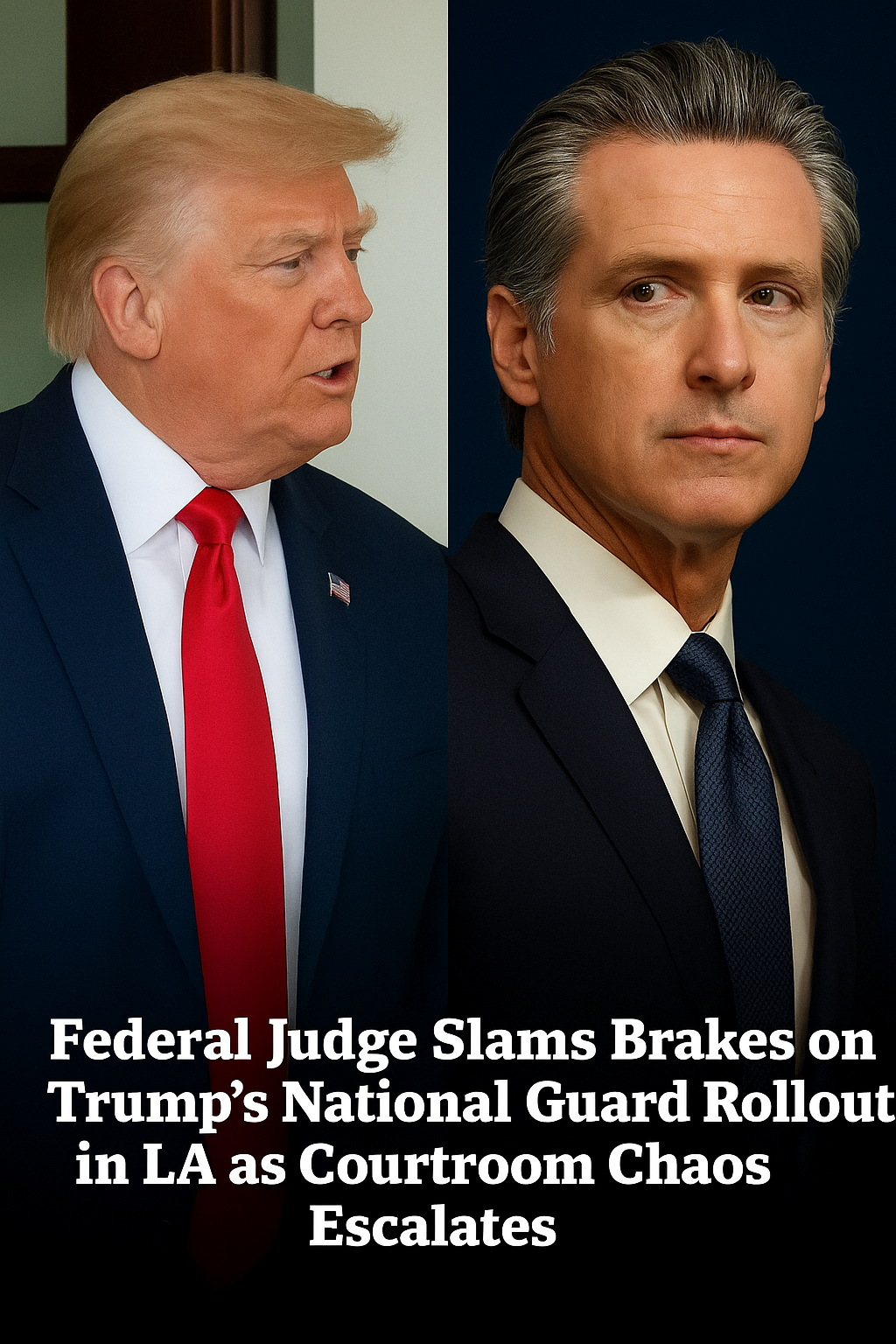
Federal Judge Slams Brakes on Trump’s National Guard Rollout in LA as Courtroom Chaos Escalates
In a significant ruling on December 10, 2025, U.S. District Judge Charles Breyer in San Francisco issued a preliminary injunction blocking President Donald Trump’s federal deployment of the California National Guard in Los Angeles.The decision ordered the immediate return of control over the troops to California Governor Gavin Newsom, marking a sharp rebuke to the Trump administration’s efforts to extend the deployment.This comes amid heightened tensions between the federal government and Democratic-led states over immigration enforcement, with the judge criticizing the administration’s interpretation of the law as granting unchecked presidential power.The ruling has been stayed until December 15 to allow for an appeal, which the White House promptly filed, signaling the dispute is far from resolved.
The deployment originated in June 2025, when Trump federalized portions of the California National Guard without Newsom’s approval to address violent protests erupting in Los Angeles over the administration’s aggressive immigration raids.These raids, part of Trump’s broader mass deportation initiative, targeted undocumented immigrants and sparked widespread demonstrations that turned chaotic, with clashes threatening federal officers and detention facilities.Initially involving over 4,000 troops, the operation was justified by the administration as necessary to quell what they described as “riots” and protect federal assets, especially after local authorities were accused of inadequate response.By October, the number of active troops in LA had dwindled to around 100, with others redirected to cities like Portland and Chicago, where similar federal interventions faced legal scrutiny.The administration had extended the deployment until February 2026, arguing ongoing risks from potential future protests warranted continued federal control.
California officials, led by Newsom, swiftly challenged the federalization in court, arguing it represented an illegal overreach that violated federal laws limiting military involvement in domestic affairs, including the Posse Comitatus Act.They contended that the initial emergency had subsided and that extensions were an attempt to create a perpetual federal police force using state resources.In contrast, the Trump administration maintained that the president holds unreviewable authority to federalize the Guard during rebellions or when local forces are insufficient, dismissing judicial oversight as inappropriate.This legal back-and-forth echoes earlier skirmishes; in June, an appeals court temporarily upheld the deployment, but Breyer’s September ruling found the original activation unlawful, setting the stage for this latest decision on extensions.Conservative outlets have highlighted Breyer’s appointment by President Clinton, framing the ruling as partisan interference in executive powers.
Judge Breyer’s 2025 ruling lambasted the administration’s stance, calling it “shocking” and warning that it could “wholly upend the federalism at the heart of our system of government.”He rejected claims of an ongoing emergency, stating that every protest carries some risk of violence but that speculative future threats do not justify indefinite deployments.Breyer emphasized the founders’ intent for checks and balances, accusing the government of seeking a “blank check” without congressional or judicial review.The decision also criticized the redirection of California troops to other states, viewing it as evidence of broader overreach in forming a national enforcement apparatus.This aligns with prior judicial blocks on similar deployments, underscoring limits on using the Guard for prolonged domestic operations.
Reactions to the ruling have been sharply divided along political lines. The Trump administration, through White House spokeswoman Abigail Jackson, defended the deployment as a lawful response to “violent riots” ignored by leaders like Newsom—whom Trump has derisively nicknamed “Newscum.”They expressed confidence in prevailing on appeal, with supporters on platforms like X echoing sentiments that the judge’s decision undermines public safety in crime-plagued LA.Governor Newsom hailed the ruling as “abundantly clear” validation that the federalization was illegal, arguing it diverted troops from essential state duties like public safety and disaster response.Progressive voices on X celebrated it as a win against authoritarianism, while conservative commentators decried it as judicial activism enabling chaos in blue cities.
The case highlights escalating federal-state conflicts under Trump’s second term, particularly in immigration policy, where deployments to Democratic strongholds have become a flashpoint.Similar legal challenges in Portland and Chicago have resulted in blocks or limitations, suggesting a pattern of judicial resistance to executive expansions of military authority in civilian matters.Constitutional scholars warn that unchecked federalization could erode state sovereignty, potentially leading to more militarized responses to domestic unrest.As the appeal progresses—possibly reaching the Supreme Court—this ruling could set precedents for future administrations, balancing national security needs against federalism principles in an increasingly polarized nation.
With the troops’ numbers already reduced and none actively patrolling streets, the practical impact may be limited in the short term, but the symbolic stakes are high.Critics argue the deployment was more about political posturing than necessity, while proponents see it as essential for enforcing federal laws in non-compliant jurisdictions.As X users debate the merits—ranging from calls for impeachment of the judge to accusations of Trump overreach—the outcome could influence how future presidents handle similar crises, testing the boundaries of executive power in America’s federal system.




Common’s Wild Confession Backfires: Serena Williams Delivers the Ultimate Clapback That Broke the Internet

Shockwaves Across the Middle East: IRGC Commander Assassinated in Daring U.S.-Israel Airstrike

Iran’s New Supreme Leader: A Clear and Present Danger

Blazing Skies Over Tehran: US-Israeli Airstrikes Obliterate Mehrabad Airport in Fiery Assault

China’s Bold Ultimatum: End the War Now or Face Global Chaos!

Fatwa Fury: Iranian Grand Ayatollah’s Deadly Decree Against Trump Ends in Fiery US Airstrike Retaliation

Iranian Navy Flees: Second Warship Begs for Refuge in Sri Lanka After U.S. Torpedo Sends Frigate to the Bottom

Trump’s Bold Ultimatum: America Demands Veto Power Over Iran’s Next Supreme Leader

Barack Obama Seals $10M Netflix Bombshell: The Untold Saga of America’s Trailblazing Leader Unveiled!

Alex Honnold’s “Embarrassing” Payday: Risking Life for Mid-Six Figures on Taipei 101

India’s Imposition of 30% Reciprocal Tariffs on Select US Imports: A New Chapter in Bilateral Trade Tensions
