
CELEBRITY
The Endless Struggle: Why Venezuela’s Oil Bonanza Remains a Global Battlefield Amid China’s Massive Debt Claim

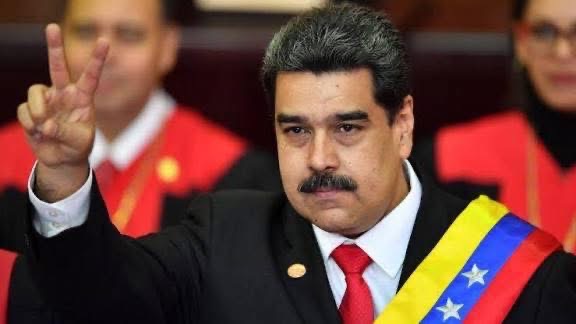
The Endless Struggle: Why Venezuela’s Oil Bonanza Remains a Global Battlefield Amid China’s Massive Debt Claim
Venezuela sits atop the world’s largest proven oil reserves, a staggering 300 billion barrels of crude that could power economies for generations. Yet, this black gold has turned the South American nation into a geopolitical powder keg. With Nicolás Maduro’s recent capture by U.S. forces marking a dramatic turning point, many assumed the era of sanctions and isolation was over, paving the way for Western oil giants to swoop in. But hold on— the tussle is far from finished. At the heart of it all? Venezuela’s colossal debt to China, estimated at around $10-12 billion outstanding from loans totaling over $60 billion since 2007, all backed by precious oil shipments.As Beijing eyes its collateral amid shifting power dynamics, the fight for control is heating up like never before.
The roots of this debt saga trace back to the early 2000s, when Hugo Chávez’s socialist regime turned to China as a lifeline amid frosty relations with the West. Desperate for cash to fund ambitious social programs and infrastructure, Venezuela inked deals worth more than $100 billion in financing from Beijing.In exchange? Oil, and lots of it. These “oil-for-loans” agreements allowed China to secure discounted crude, bolstering its energy security while propping up Caracas. By 2019, the debt peaked at $16.7 billion, but years of repayments—primarily through oil deliveries—have whittled it down.Even so, Venezuela still ships hundreds of thousands of barrels daily to China, with exports hitting 746,000 barrels per day in November 2025 alone, accounting for 80% of its total output.
Fast-forward to 2026, and Maduro’s downfall has thrown a wrench into this delicate balance. His seizure by U.S. authorities has sparked hopes in Washington for a debt restructuring that could favor American interests, potentially easing sanctions and opening doors for companies like Chevron to ramp up production.Venezuela’s total external debt now balloons to $150-170 billion, including $102 billion in bonds and $22 billion owed to oil firms.But China, as the largest creditor in Latin America with nearly 39% of its regional loans tied to Venezuela, isn’t about to let its investments evaporate.Beijing’s silence on Maduro’s fate speaks volumes—questions swirl over whether the remaining $10 billion-plus will ever be repaid, especially as U.S. moves threaten to redirect oil flows westward.
China’s strategy has always been long-game pragmatism. Over the decades, state-owned giants like CNPC and Sinopec have embedded themselves in Venezuelan oil fields, controlling key assets and ensuring a steady supply despite U.S. sanctions.In 2025, Venezuela supplied China with about 200,000 barrels per day, a fraction of global needs but a critical hedge against Middle East volatility.Now, with Maduro out, Beijing faces a dilemma: push for repayment through diplomatic channels or leverage its influence in the region to back a sympathetic successor regime. Disruptions to these flows are “manageable” for China in the short term, but losing access to such vast reserves could sting, especially as global energy demands soar.
The U.S., under a new administration eyeing energy independence, sees Venezuela’s oil as a prize worth pursuing. Trump’s potential return to the Monroe Doctrine playbook—warning off foreign powers from Latin America—could escalate tensions.Recent U.S. military deployments in the Caribbean, ostensibly for counter-narcotics, have drawn sharp rebukes from Beijing, which views them as threats to Venezuelan sovereignty and its own stakes.Analysts warn that any aggressive U.S. grab for oil could provoke China to fund opposition or deepen ties with other Latin American nations, weakening American influence in the hemisphere.
Beyond geopolitics, the human cost in Venezuela remains staggering. While creditors bicker, ordinary Venezuelans grapple with hyperinflation, scarcity, and a crumbling economy burdened by these debts. Failed projects, like the $7.5 billion Chinese-funded train line that never materialized, highlight the mismanagement—leaving citizens to foot the bill through discounted oil sales.As debt rallies in financial markets belie the chaos on the ground, a sovereign restructuring looms, potentially the messiest in history.
In the end, the tussle for Venezuela’s oil isn’t just about barrels—it’s a proxy war for global influence. China won’t relinquish its claims without a fight, and with reserves worth trillions at stake, expect diplomatic fireworks, legal battles, and perhaps even covert maneuvers. As one expert puts it, Maduro’s exit might close one chapter, but the debt-fueled drama ensures the story is far from over.The world watches as superpowers jostle, reminding us that in the oil game, no one bows out quietly.



Common’s Wild Confession Backfires: Serena Williams Delivers the Ultimate Clapback That Broke the Internet

Shockwaves Across the Middle East: IRGC Commander Assassinated in Daring U.S.-Israel Airstrike

Iran’s New Supreme Leader: A Clear and Present Danger

Blazing Skies Over Tehran: US-Israeli Airstrikes Obliterate Mehrabad Airport in Fiery Assault

China’s Bold Ultimatum: End the War Now or Face Global Chaos!

Fatwa Fury: Iranian Grand Ayatollah’s Deadly Decree Against Trump Ends in Fiery US Airstrike Retaliation

Iranian Navy Flees: Second Warship Begs for Refuge in Sri Lanka After U.S. Torpedo Sends Frigate to the Bottom

Trump’s Bold Ultimatum: America Demands Veto Power Over Iran’s Next Supreme Leader

Barack Obama Seals $10M Netflix Bombshell: The Untold Saga of America’s Trailblazing Leader Unveiled!

Alex Honnold’s “Embarrassing” Payday: Risking Life for Mid-Six Figures on Taipei 101

India’s Imposition of 30% Reciprocal Tariffs on Select US Imports: A New Chapter in Bilateral Trade Tensions
