
CELEBRITY
The Viral Late-Night Takedown: How Jimmy Kimmel and Jim Carrey’s On-Air Exposure Sent Shockwaves Through Trump World

The Viral Late-Night Takedown: How Jimmy Kimmel and Jim Carrey’s On-Air Exposure Sent Shockwaves Through Trump World
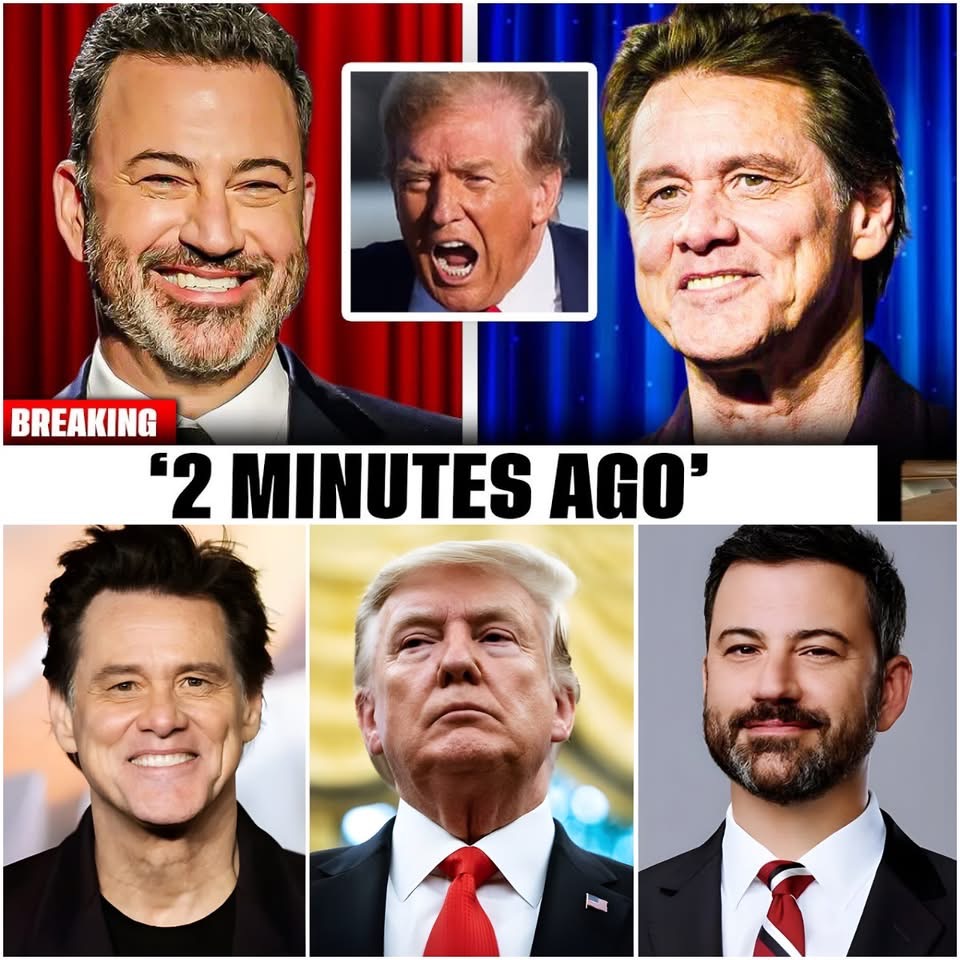
In a stunning turn of events that has captivated audiences and ignited social media frenzy, late-night host Jimmy Kimmel and comedian Jim Carrey reportedly joined forces on live television to deliver a scathing exposé on former President Donald Trump. What started as a seemingly innocuous segment on *Jimmy Kimmel Live!* escalated into a meticulously crafted dissection of Trump’s public persona, contradictions, and controversies. Kimmel, known for his sharp wit and unapologetic political commentary, set the tone by replaying clips of Trump’s own statements, highlighting inconsistencies in his rhetoric on everything from policy promises to personal anecdotes. Carrey, the master of impressions and satire, then entered the fray with a blunt, no-holds-barred analysis that left the studio audience—and viewers at home—stunned into silence before erupting in applause.
The segment’s power lay in its subtlety; there were no over-the-top antics or raised voices, just a calm, evidence-based unraveling of Trump’s narrative. Kimmel methodically lined up “receipts”—archival footage, quotes, and timelines—that painted a picture of hypocrisy and self-contradiction. Carrey complemented this with his signature observational humor, pointing out what he described as Trump’s “biggest weakness: the inability to handle calm confidence backed by facts.” The duo’s chemistry was electric, turning what could have been a standard monologue into a viral moment that felt like a cultural reckoning. Social media platforms lit up almost immediately, with hashtags like KimmelCarreyTakedown and TrumpExposed trending worldwide as clips circulated at breakneck speed.
Insider accounts suggest Trump was tuned in live from his Mar-a-Lago residence, and his reaction was nothing short of explosive. Sources close to the former president described a scene of chaos: Trump allegedly paced furiously, berating aides and labeling the segment a “coordinated ambush.” One anonymous Mar-a-Lago insider claimed the meltdown extended over an hour, with Trump demanding investigations into how Kimmel and Carrey were permitted to collaborate on air. This outburst aligns with Trump’s history of lashing out at media critics, from late-night hosts to journalists, often via social media rants or public statements. While Trump has not officially commented on the incident, his pattern of responding to perceived slights indicates this could fuel further public feuds.
The public’s response has been polarized yet overwhelmingly viral, with millions viewing and sharing the clip across platforms like YouTube, TikTok, and Facebook. Commentators from various outlets have hailed it as “quiet humiliation at its finest,” emphasizing how the lack of theatrics amplified the impact. Supporters of Trump, particularly within MAGA circles, have decried it as biased media warfare, flooding online forums with accusations of Hollywood elitism. Meanwhile, critics of the former president view it as a refreshing dose of accountability, especially in an era where political discourse often devolves into shouting matches. The segment’s rapid spread underscores the enduring power of late-night TV in shaping public opinion, even as streaming services challenge traditional broadcasting.
Analysts point out that this moment exposes a deeper vulnerability in Trump’s public image: his discomfort with composed, fact-driven critiques. Unlike bombastic attacks that he can dismiss as “fake news” or partisan hacks, Kimmel and Carrey’s approach was understated yet unrelenting, forcing viewers to confront the material on its merits. Political pundits suggest this could signal a resurgence in celebrity-driven activism, reminiscent of Carrey’s past anti-Trump artwork and Kimmel’s advocacy on issues like healthcare. In a post-2024 election landscape, where Trump remains a dominant figure in Republican politics, such exposures might influence voter perceptions or energize opposition movements.
Beyond the immediate drama, the incident raises questions about free speech and media boundaries in polarized times. Kimmel, who has faced network pushback in the past for his Trump commentary, and Carrey, a vocal critic since Trump’s first term, represent a Hollywood contingent unafraid to wield influence. As the full exchange continues to trend, with warnings of it potentially “disappearing” adding to the intrigue, it serves as a reminder of how entertainment can intersect with politics to create lasting cultural moments. Whether this takedown marks a turning point or just another blip in the endless Trump news cycle remains to be seen, but its ripple effects are already felt across the political spectrum.
As discussions evolve, some observers note the segment’s timing amid ongoing debates about Trump’s influence and legacy. With echoes of past late-night roasts, this collaboration could inspire more unified celebrity voices against perceived authoritarian tendencies. Ultimately, the Kimmel-Carrey moment isn’t just about one night on TV—it’s a snapshot of America’s ongoing struggle with truth, satire, and power in the public eye.





Common’s Wild Confession Backfires: Serena Williams Delivers the Ultimate Clapback That Broke the Internet

Shockwaves Across the Middle East: IRGC Commander Assassinated in Daring U.S.-Israel Airstrike

Iran’s New Supreme Leader: A Clear and Present Danger

Blazing Skies Over Tehran: US-Israeli Airstrikes Obliterate Mehrabad Airport in Fiery Assault

China’s Bold Ultimatum: End the War Now or Face Global Chaos!

Fatwa Fury: Iranian Grand Ayatollah’s Deadly Decree Against Trump Ends in Fiery US Airstrike Retaliation

Iranian Navy Flees: Second Warship Begs for Refuge in Sri Lanka After U.S. Torpedo Sends Frigate to the Bottom

Trump’s Bold Ultimatum: America Demands Veto Power Over Iran’s Next Supreme Leader

Barack Obama Seals $10M Netflix Bombshell: The Untold Saga of America’s Trailblazing Leader Unveiled!

Alex Honnold’s “Embarrassing” Payday: Risking Life for Mid-Six Figures on Taipei 101

India’s Imposition of 30% Reciprocal Tariffs on Select US Imports: A New Chapter in Bilateral Trade Tensions
