
CELEBRITY
Trump’s “8 Wars” Boast Under Fire: Rep. Garcia’s Viral Jab Sparks Debate on Peacemaker Claims

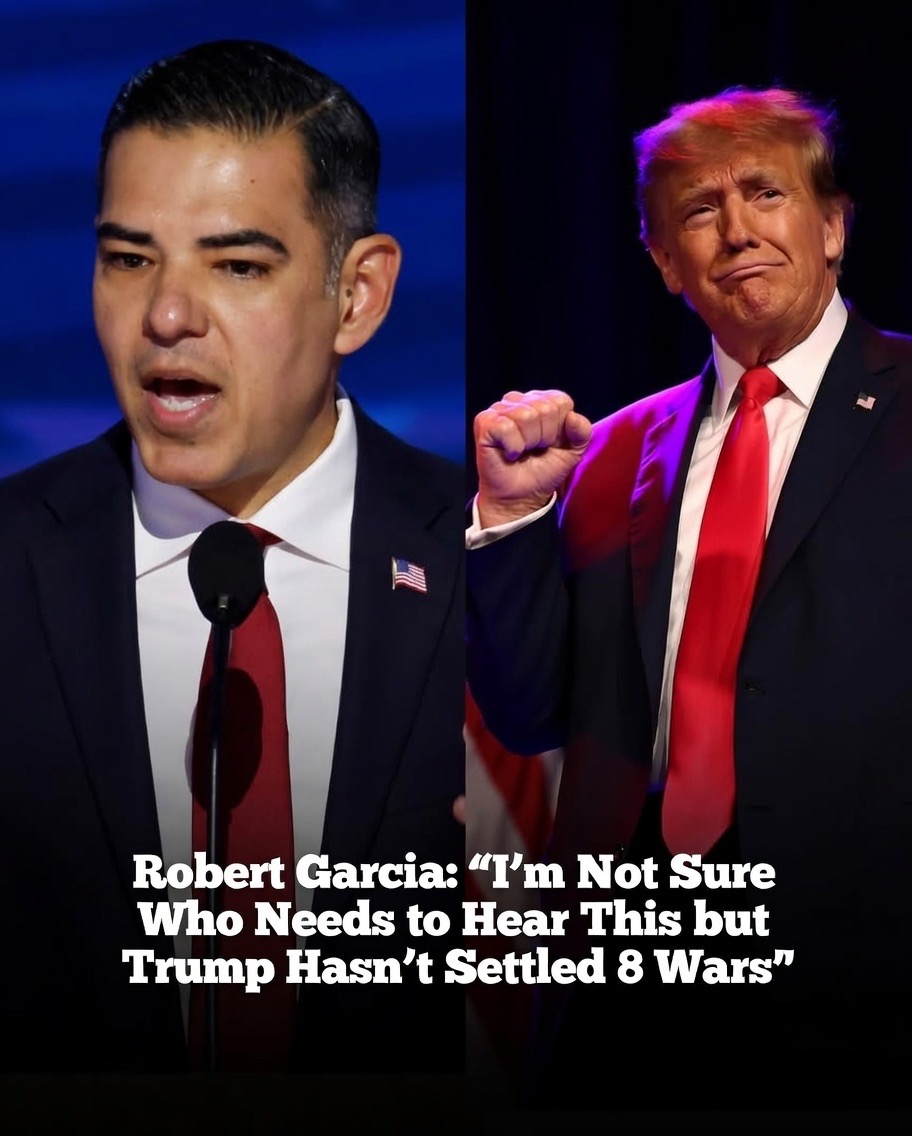
Trump’s “8 Wars” Boast Under Fire: Rep. Garcia’s Viral Jab Sparks Debate on Peacemaker Claims
In a pointed social media post that’s ignited fierce online chatter, Democratic Congressman Robert Garcia took aim at President Donald Trump’s repeated assertions of global peacemaking prowess. “I’m not sure who needs to hear this but Trump hasn’t settled 8 wars,” Garcia tweeted on December 28, 2025, accompanied by a split-image graphic juxtaposing the two figures in dramatic poses.The statement quickly amassed thousands of likes, reposts, and replies, highlighting the deep partisan divide over Trump’s foreign policy achievements since his return to the White House in January 2025. As the year draws to a close, this critique underscores ongoing skepticism about whether Trump’s diplomatic interventions truly qualify as ending “wars” or if they’re overhyped ceasefires in longstanding tensions.
Trump’s claims of settling multiple conflicts have been a staple of his second-term narrative, evolving from six to seven and eventually eight “wars” ended in under a year. During speeches, interviews, and social media blasts, the president has positioned himself as a unparalleled dealmaker, even suggesting he deserves the Nobel Peace Prize for averting global catastrophes.Supporters hail this as “peace through strength,” crediting Trump with decisive actions that halted bloodshed and prevented escalations into full-scale wars. Critics, however, argue that many of these situations weren’t active wars to begin with, and Trump’s role is often exaggerated or disputed by the involved parties.
Let’s break down the eight conflicts Trump has referenced. First, the brief June 2025 clash between Israel and Iran, dubbed the “12-Day War,” saw Israeli strikes on Iranian nuclear sites followed by a U.S.-brokered ceasefire. Trump claimed credit for ordering supportive actions and mediating the truce, stalling Iran’s nuclear ambitions.Similarly, a ceasefire in the Kashmir dispute between India and Pakistan was attributed to U.S.-led talks, though India downplayed Trump’s influence, insisting its own pressure was the key factor.These examples showcase Trump’s hands-on approach, but experts note that ceasefires don’t equate to permanent settlements, as underlying issues persist.
Moving to Africa, Trump facilitated a peace agreement between Rwanda and the Democratic Republic of Congo (DRC), ending hostilities involving the M23 rebel group backed by Rwanda. Hosted at the White House, this deal was praised for stopping immediate fighting, yet analysts warn of fragile enforcement without ongoing international monitoring.
In the Nile River dispute between Egypt and Ethiopia over the Grand Ethiopian Renaissance Dam, Trump claimed to have averted war through threats and negotiations, but no formal agreement exists, and tensions over water rights continue to simmer without resolution.This pattern raises questions: Are these true war endings or temporary pauses in diplomatic spats?
In Europe and the Balkans, Trump’s interventions included Armenia and Azerbaijan over Nagorno-Karabakh, where a White House-brokered deal aimed to end fighting, though ratification remains pending and territorial claims linger.Serbia and Kosovo saw economic normalization efforts, with Trump threatening tariffs to prevent escalation—yet no war was imminent, and the agreement builds on prior talks from his first term.Thailand and Cambodia’s border dispute rounds out the list, with Trump touting a settlement that critics say was more about longstanding talks than U.S. heroics. Fact-checkers from outlets like FactCheck.org and the BBC emphasize that some conflicts weren’t “wars” at all, labeling Trump’s tally as a mix of actual ceasefires and exaggerated preventions.
Garcia’s tweet taps into broader Democratic frustration, portraying Trump’s boasts as self-promotional fluff amid domestic challenges like immigration raids and budget fights.Responses on X (formerly Twitter) range from mockery—”Trump isn’t a peacemaker, he’s a bully in a suit”—to defense, with users arguing that even temporary halts save lives and demonstrate effective leadership.One pro-Trump post questioned the critique: “If a leader helps stop fighting, even temporarily, is that bad? Or is it only bad when it’s him?”This polarization reflects how foreign policy wins are viewed through a partisan lens, with Trump’s allies seeing bold action and opponents seeing hype over substance.
As 2025 wraps up, the debate over Trump’s “8 wars” legacy could shape perceptions heading into midterm elections. While the president eyes a ninth resolution in Ukraine-Russia talks, skeptics like Garcia remind the public to scrutinize the details.Whether these efforts yield lasting peace or merely photo ops remains to be seen, but one thing’s clear: In the arena of global diplomacy, Trump’s style—brash, direct, and unapologetic—continues to divide opinions as sharply as ever.




Common’s Wild Confession Backfires: Serena Williams Delivers the Ultimate Clapback That Broke the Internet

Shockwaves Across the Middle East: IRGC Commander Assassinated in Daring U.S.-Israel Airstrike

Iran’s New Supreme Leader: A Clear and Present Danger

Blazing Skies Over Tehran: US-Israeli Airstrikes Obliterate Mehrabad Airport in Fiery Assault

China’s Bold Ultimatum: End the War Now or Face Global Chaos!

Fatwa Fury: Iranian Grand Ayatollah’s Deadly Decree Against Trump Ends in Fiery US Airstrike Retaliation

Iranian Navy Flees: Second Warship Begs for Refuge in Sri Lanka After U.S. Torpedo Sends Frigate to the Bottom

Trump’s Bold Ultimatum: America Demands Veto Power Over Iran’s Next Supreme Leader

Barack Obama Seals $10M Netflix Bombshell: The Untold Saga of America’s Trailblazing Leader Unveiled!

Alex Honnold’s “Embarrassing” Payday: Risking Life for Mid-Six Figures on Taipei 101

India’s Imposition of 30% Reciprocal Tariffs on Select US Imports: A New Chapter in Bilateral Trade Tensions
