
CELEBRITY
Trump’s Bold Ultimatum: America Demands Veto Power Over Iran’s Next Supreme Leader

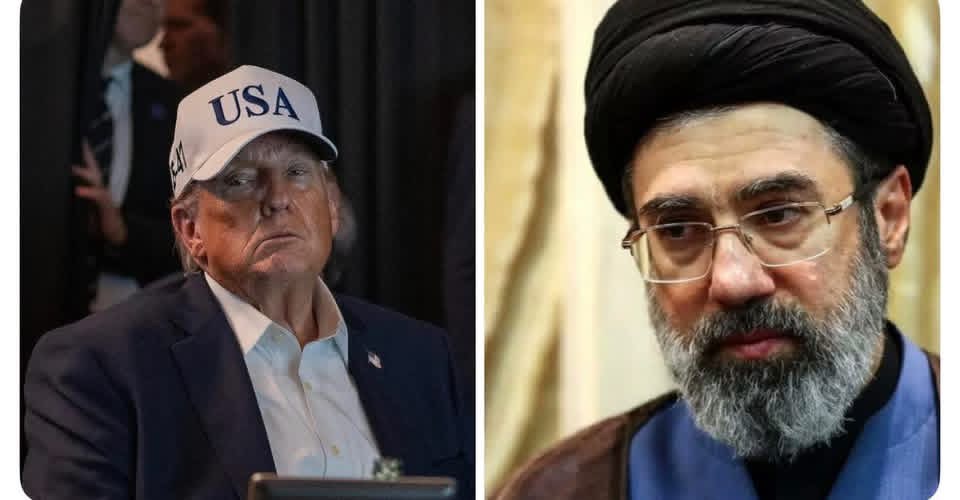
Trump’s Bold Ultimatum: America Demands Veto Power Over Iran’s Next Supreme Leader
In a stunning display of unfiltered diplomacy, President Donald Trump has thrust the United States squarely into the heart of Iran’s chaotic power vacuum. Following the reported elimination of Ayatollah Ali Khamenei in joint U.S.-Israeli airstrikes, Trump sat down for a no-holds-barred interview with Axios, where he didn’t just comment on Tehran’s future—he demanded a seat at the table. “America will have a say in who replaces the slain Ayatollah,” Trump asserted, sending shockwaves through global capitals. This isn’t mere rhetoric; it’s a declaration that the era of passive U.S. foreign policy is dead and buried.
Trump zeroed in on Mojtaba Khamenei, the late supreme leader’s son and a shadowy figure long whispered to be the heir apparent. Labeling him “unacceptable” and a “lightweight,” the president painted Mojtaba as a continuation of the hardline regime that has sponsored terrorism across the Middle East for decades. “He’s just like his father—radical, dangerous, and out of touch,” Trump said, drawing a stark line in the sand. He insisted that any successor must pivot toward “harmony and peace,” abandoning Iran’s proxy wars, nuclear ambitions, and support for groups like Hezbollah and Hamas. Anything less, Trump warned, would force America back into the fray, potentially within five years.
The president’s confidence stems from his track record of muscular interventions. He drew a direct parallel to his administration’s handling of Venezuela’s Nicolás Maduro, where relentless pressure—sanctions, diplomatic isolation, and threats of military action—kept the socialist regime on its heels without full-scale invasion. “I have to be involved in the appointment,” Trump stated plainly, evoking images of U.S. envoys negotiating in smoke-filled rooms in Tehran. Critics may call it imperial overreach, but Trump frames it as pragmatic realism: Why allow a hostile regime to regroup when you can shape its rebirth?
This bombshell comes amid escalating military actions that have left Iran reeling. U.S. and Israeli forces have already decimated key targets, including Khamenei’s inner circle and military command structures. B-52s, B-1s, and stealthy B-2 bombers have dominated the skies, pounding Iranian assets with precision strikes. In retaliation, Tehran’s drone swarms targeted allies like Abu Dhabi, but most were intercepted, exposing the regime’s desperation and technological inferiority. The power vacuum is palpable, with factions scrambling in the shadows, and Trump’s intervention could tip the scales toward a more moderate figure—or ignite a new regional firestorm.
Skeptics argue that Trump’s meddling risks alienating potential reformers within Iran, but the president dismisses such concerns as weak-kneed liberalism. “The days of leading from behind are over,” he proclaimed, echoing his “America First” doctrine. This approach harks back to historical precedents, like the U.S. role in post-WWII Japan or the denazification of Germany, where victors imposed terms to ensure lasting peace. In Iran’s case, Trump envisions a successor who dismantles the theocratic grip, opens doors to economic ties, and ends the export of revolution. Peace through strength, he insists, is the only path forward—no negotiations with terrorists, no middle ground.
As the world watches, Iran’s mullahs and military brass face an existential choice: heed Trump’s warning and install a peacemaker, or double down on radicalism and invite total defeat. The stakes couldn’t be higher, with nuclear sites still smoldering and global oil markets on edge. Trump’s message resonates with allies in the Gulf and Israel, who see this as a rare opportunity to redraw the Middle East map. But for detractors at home and abroad, it’s a reckless gamble that could drag the U.S. into another endless conflict.
Ultimately, Trump’s ultimatum underscores a seismic shift in U.S. policy: from containment to conquest of influence. Whether this leads to a stable Iran or escalates into broader war remains uncertain, but one thing is clear—America is calling the shots, and Tehran had better listen. As B-52s circle overhead, the message is unmistakable: Change on our terms, or face the consequences.




Common’s Wild Confession Backfires: Serena Williams Delivers the Ultimate Clapback That Broke the Internet

Shockwaves Across the Middle East: IRGC Commander Assassinated in Daring U.S.-Israel Airstrike

Iran’s New Supreme Leader: A Clear and Present Danger

Blazing Skies Over Tehran: US-Israeli Airstrikes Obliterate Mehrabad Airport in Fiery Assault

China’s Bold Ultimatum: End the War Now or Face Global Chaos!

Fatwa Fury: Iranian Grand Ayatollah’s Deadly Decree Against Trump Ends in Fiery US Airstrike Retaliation

Iranian Navy Flees: Second Warship Begs for Refuge in Sri Lanka After U.S. Torpedo Sends Frigate to the Bottom

Trump’s Bold Ultimatum: America Demands Veto Power Over Iran’s Next Supreme Leader

Barack Obama Seals $10M Netflix Bombshell: The Untold Saga of America’s Trailblazing Leader Unveiled!

Alex Honnold’s “Embarrassing” Payday: Risking Life for Mid-Six Figures on Taipei 101

India’s Imposition of 30% Reciprocal Tariffs on Select US Imports: A New Chapter in Bilateral Trade Tensions
