
CELEBRITY
Trump’s Expanding Threats: From Venezuela to a Broader Hemisphere and Beyond

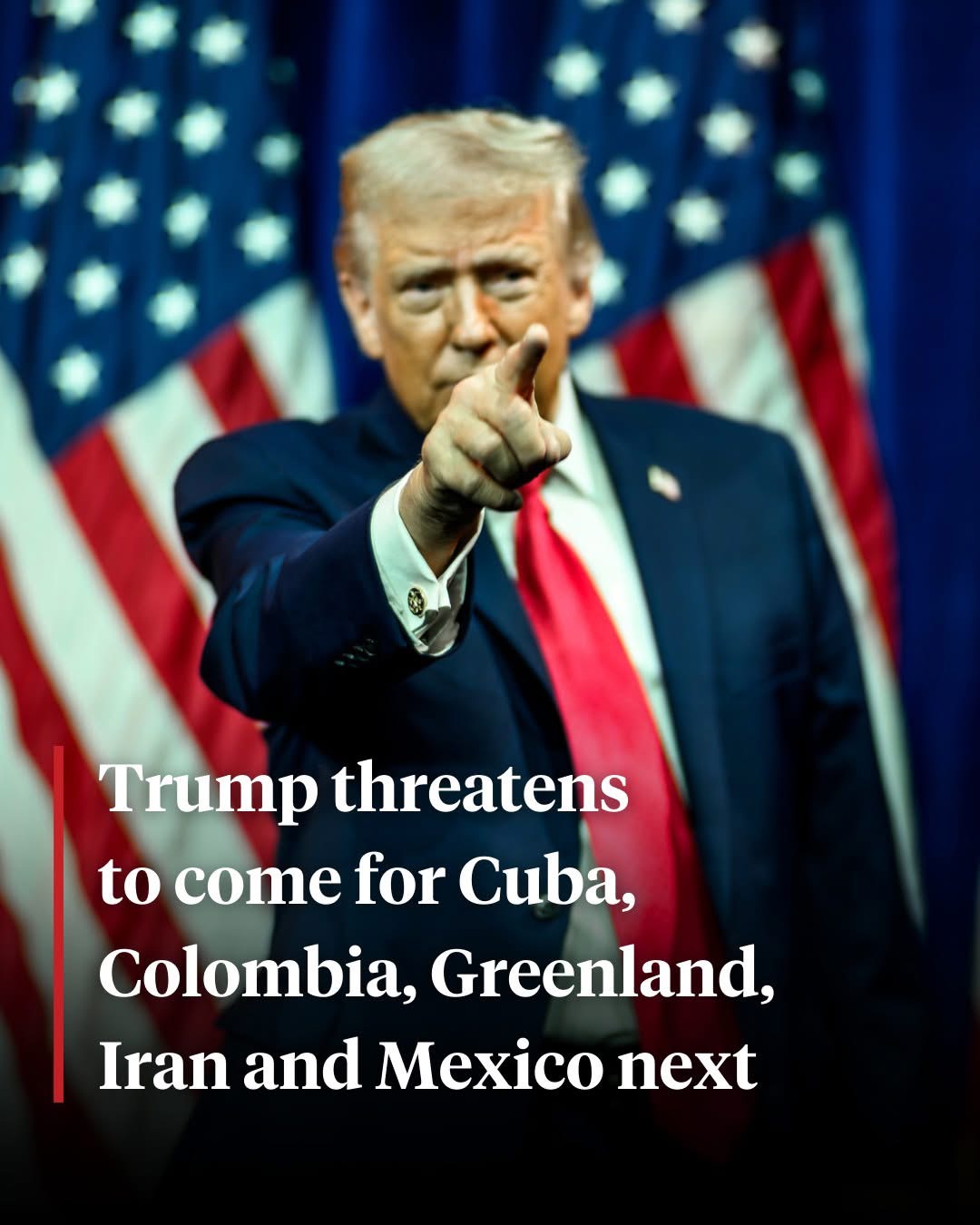
Trump’s Expanding Threats: From Venezuela to a Broader Hemisphere and Beyond
In a bold escalation following the U.S. military strike on Venezuela and the capture of former President Nicolás Maduro, President Donald Trump has issued stark warnings to several nations, signaling potential future interventions. Speaking to reporters aboard Air Force One and during a return trip to Washington, Trump explicitly mentioned Cuba, Colombia, Greenland, Iran, and Mexico as possible next targets. This comes amid heightened tensions in Latin America and beyond, raising concerns about a revived “Monroe Doctrine” under Trump’s administration, now dubbed by some as the “Don-roe Doctrine.” The president’s remarks have sparked international debate, with critics accusing him of imperialistic overreach while supporters view it as necessary action against perceived threats to U.S. interests.
The context for these threats stems directly from the recent operation in Venezuela, which Trump has hailed as a success in combating socialism and drug trafficking. According to reports, Trump predicted that Cuba’s government is “ready to fall,” suggesting that internal pressures and U.S. influence could lead to its collapse without direct military action. He described the island nation as on the brink, implying that the fall of Maduro might inspire similar regime changes. This rhetoric echoes Trump’s long-standing criticism of Cuba’s communist regime, including tightened sanctions during his previous term.However, Cuban officials have dismissed these claims as provocative bluster, vowing to resist any external interference.
Turning to Colombia, Trump has directed pointed threats at President Gustavo Petro, a left-leaning leader whose policies on drug decriminalization and peace negotiations with rebel groups have drawn U.S. ire. Trump stated that a military operation in Colombia “sounds good” to him, accusing the country of failing to curb drug cartels that allegedly funnel narcotics into the United States. This warning has alarmed Colombian authorities, who fear it could undermine ongoing efforts to stabilize the region. Analysts note that Colombia, a key U.S. ally, has received billions in aid over the years, but Trump’s comments suggest a shift toward more coercive measures if cooperation falters.
Greenland, an autonomous territory of Denmark, represents a more unconventional target in Trump’s list. The president has reiterated his interest in acquiring the island, citing its strategic importance for national security and resource exploitation. In his recent statements, Trump threatened to “take control” if Denmark does not comply, reviving a proposal from his first term that was met with ridicule and rejection by Danish leaders. Greenland’s residents have expressed strong opposition, viewing the idea as a violation of their sovereignty. This threat has strained U.S.-Denmark relations, with European allies warning against unilateral actions that could disrupt NATO unity.
Iran finds itself in Trump’s crosshairs amid ongoing Middle East tensions, though it stands out as geographically distant from the Latin American focus. Trump has accused Iran of sponsoring terrorism and destabilizing the region, hinting at potential military strikes if the country continues its nuclear ambitions or support for proxy groups. This builds on his previous administration’s “maximum pressure” campaign, including the assassination of General Qasem Soleimani. Iranian officials have responded defiantly, labeling Trump’s words as empty threats from a leader seeking to distract from domestic issues. The inclusion of Iran in this list suggests Trump’s foreign policy may extend beyond the Western Hemisphere.
Mexico, a close neighbor and major trade partner, has been warned to “get their act together” on issues like immigration and drug trafficking. Trump threatened tariffs or border closures if Mexico does not address migrant flows and cartel violence more aggressively. This echoes his 2016 campaign promises and actions like the “Remain in Mexico” policy. Mexican President Claudia Sheinbaum has called for dialogue rather than confrontation, emphasizing the mutual benefits of NAFTA’s successor, the USMCA. However, Trump’s base supports a hardline stance, viewing it as essential for U.S. security.
The broader implications of these threats are profound, potentially reshaping global alliances and economic ties. International observers, including the United Nations, have urged restraint, warning that such rhetoric could lead to unnecessary conflicts and economic instability. In Latin America, leaders are convening emergency summits to coordinate responses, while in Europe, Denmark has sought support from EU partners. Domestically, Trump’s comments have divided opinions, with Republicans praising his decisiveness and Democrats decrying it as reckless adventurism. As the world watches, the question remains whether these are mere words or precursors to action in Trump’s second term.



Common’s Wild Confession Backfires: Serena Williams Delivers the Ultimate Clapback That Broke the Internet

Shockwaves Across the Middle East: IRGC Commander Assassinated in Daring U.S.-Israel Airstrike

Iran’s New Supreme Leader: A Clear and Present Danger

Blazing Skies Over Tehran: US-Israeli Airstrikes Obliterate Mehrabad Airport in Fiery Assault

China’s Bold Ultimatum: End the War Now or Face Global Chaos!

Fatwa Fury: Iranian Grand Ayatollah’s Deadly Decree Against Trump Ends in Fiery US Airstrike Retaliation

Iranian Navy Flees: Second Warship Begs for Refuge in Sri Lanka After U.S. Torpedo Sends Frigate to the Bottom

Trump’s Bold Ultimatum: America Demands Veto Power Over Iran’s Next Supreme Leader

Barack Obama Seals $10M Netflix Bombshell: The Untold Saga of America’s Trailblazing Leader Unveiled!

Alex Honnold’s “Embarrassing” Payday: Risking Life for Mid-Six Figures on Taipei 101

India’s Imposition of 30% Reciprocal Tariffs on Select US Imports: A New Chapter in Bilateral Trade Tensions
